Supabase Analytics Stack for Teams Without a Data Engineer
Pre-calculated Postgres datasets give small teams trusted metrics.
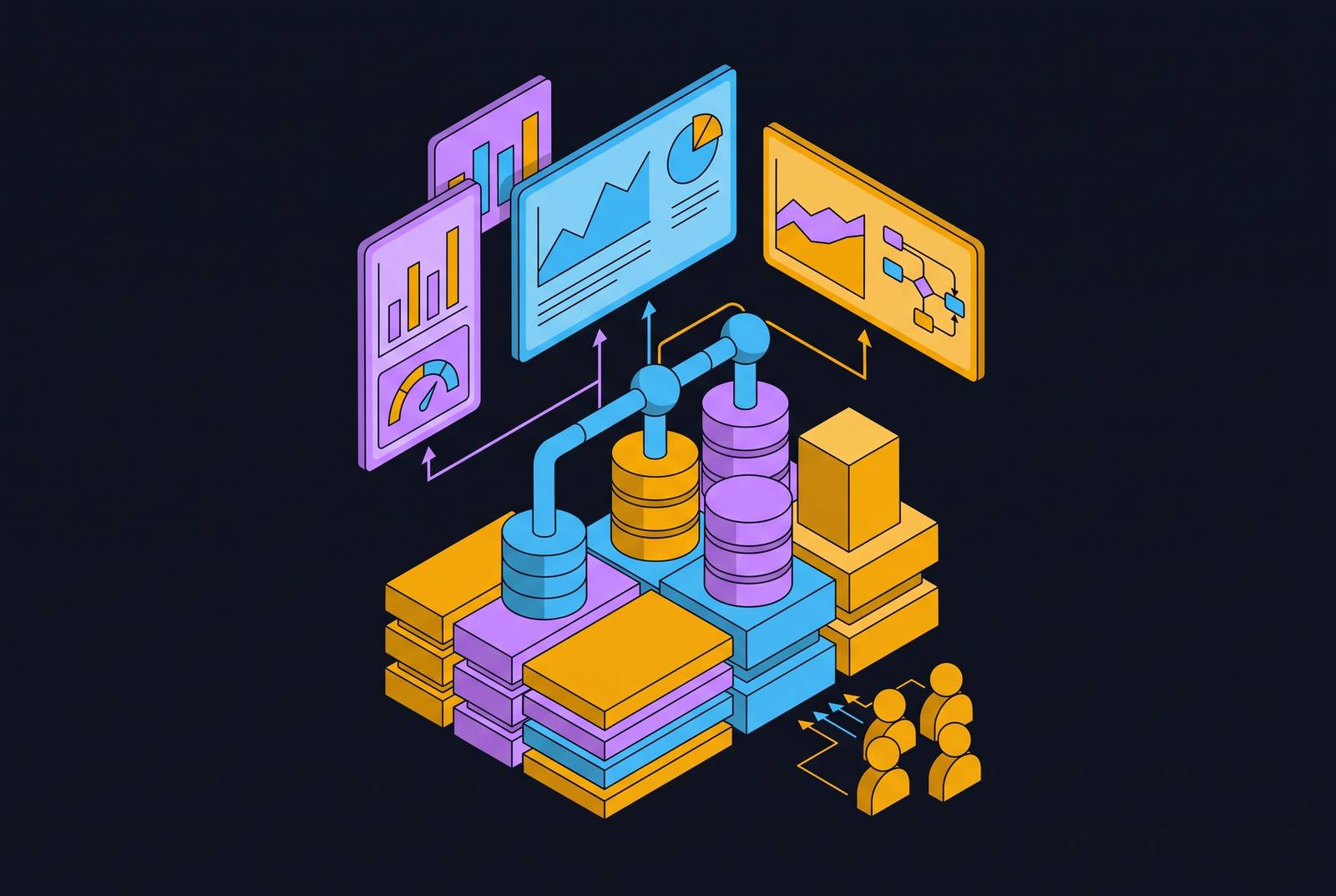
Teams that use Supabase can get analytics they trust without a data warehouse by building on Postgres with a governed layer of pre-calculated datasets. The stack has shared metric definitions, calculations that run on a schedule, and analytical reads that do not touch production. It gives founders, dashboards, and AI agents the same board-ready numbers without the need for a dedicated data engineer.
Why Supabase teams hit an analytics ceiling before they hit a database limit
Supabase brings Postgres, auth, storage, realtime, and edge functions into one stack, concentrating the foundations of a product in a system a small team can manage. Its database is a real Postgres instance, with SQL, foreign keys, constraints, indexes, Row Level Security, and an extension ecosystem. That foundation gives teams substantial control over their data. It also makes the missing analytics layer more consequential because the records needed for reporting are already close at hand. Having those records available, however, is not the same as having agreed numbers.
The gap becomes visible when one engineer writes SUM(revenue) and another writes SUM(amount_captured). Both queries may run as they should but give different Q2 revenue figures. No one may spot the difference until an investor asks for audited numbers. More ad-hoc SQL does not fix that problem if the person who wrote each calculation is still the only one in charge of it. Supabase is doing its intended job, but a collection of independently maintained queries is not a governed source of truth.
Postgres is a transactional row store, so reporting queries compete with application traffic for database resources. A team can therefore hit an analytics ceiling before the database stops serving its product well.
What Postgres can handle analytically and where it runs out of runway
Postgres-native techniques are the right starting point while the analytical workload remains manageable. Good schema design, targeted indexes, query analysis, and connection management all buy useful runway. Read replicas can take expensive reporting queries off the primary instance, while materialized views save the work of calculating the same derived results over and over. These techniques extend the existing foundation without requiring a warehouse. These engineering choices still require metric definitions.
Materialized views are particularly practical when a metric can be accurate as of its last refresh. They provide table-speed reads for repeatable derived datasets without a separate ETL pipeline. Use REFRESH MATERIALIZED VIEW CONCURRENTLY for refreshes that must let readers continue uninterrupted. The operation computes new results in a temporary relation, compares them with the existing view, and applies the differences. It does not simply swap tables, and it does not eliminate the work of recalculating the dataset.
Large analytical scans can cause I/O amplification, cache eviction, and MVCC bloat that better SQL cannot remove from the workload. Materialized views, summary tables, and replicas defer this boundary. When that boundary arrives, a lightweight columnar engine such as DuckDB can query pre-exported Parquet datasets without requiring a full warehouse.
Why a separate data warehouse is the wrong answer for most Supabase teams
A separate warehouse changes the operating model of a small team. It introduces another system to maintain, another schema to keep synchronized, and another place where metric definitions can diverge. An ETL pipeline then becomes the connection on which reporting depends. Without a dedicated data engineer, maintaining that connection competes with product work. A broken pipeline leaves the team with stale or missing numbers precisely when it needs a dependable answer.
That trade-off conflicts with the reason many teams choose Supabase in the first place. A unified backend reduces the number of systems that need coordination, while a warehouse and ETL layer add that coordination back. For most teams without a data engineer, extending the existing foundation is the more practical architectural choice. Pre-modeled datasets can serve analytical consumers through a shared interface while a columnar engine handles their queries. This separates workloads without asking the team to operate a second data platform.
Extending Postgres does not mean every analytical read must remain inside Postgres. Pre-calculated results can become Parquet datasets without turning a separate warehouse into the center of the stack.
The five metrics a founder actually needs before anything else
Founder-run teams often accumulate dashboards faster than they establish which numbers drive decisions. For most B2B SaaS startups, the initial set is CAC, LTV, monthly churn, ARR, and gross margin. Other measures take second place until the team has defined those five and can trust them. A larger dashboard does not compensate for uncertainty in its most important figures.
Each metric needs one agreed definition before it becomes a recurring report. The same goes for supporting measures such as active users. Finance cannot define activity through paid transactions while product defines it through daily app logins and present the results as interchangeable. Both calculations can describe something useful, but they do not describe the same thing. The board deck must make that difference clear, even when the measures share a label.
The Burn Multiple adds a related test in investor conversations by expressing how much the company spends to generate each dollar of new ARR. It depends on reconciliation across the relevant sources, with ARR from billing, cash from the bank, and product usage from the analytics layer. This is why agreement on the underlying five metrics matters before expanding coverage. If sales, finance, and product each have their own version of ARR, leadership must agree on the numbers before they can talk about the business. A governed definition removes that avoidable argument.
How to add analytics to Supabase without setting up a data warehouse
Begin with pre-calculation for metrics that can tolerate a refresh window. Materialized views hold the derived results, and pg_cron, available as a Supabase extension, schedules their refreshes without an external scheduler. Use REFRESH MATERIALIZED VIEW CONCURRENTLY where reads must continue during refresh. Keep access rules at the Postgres layer through Row Level Security so that application checks are not the only checks on access. Together, these components provide a practical foundation for recurring calculations close to their source.
They let a team examine records or answer a specific question without building a reporting system first. Their usefulness does not make an individual query a governed metric. An analytics layer must supply agreed calculations that downstream consumers reuse.
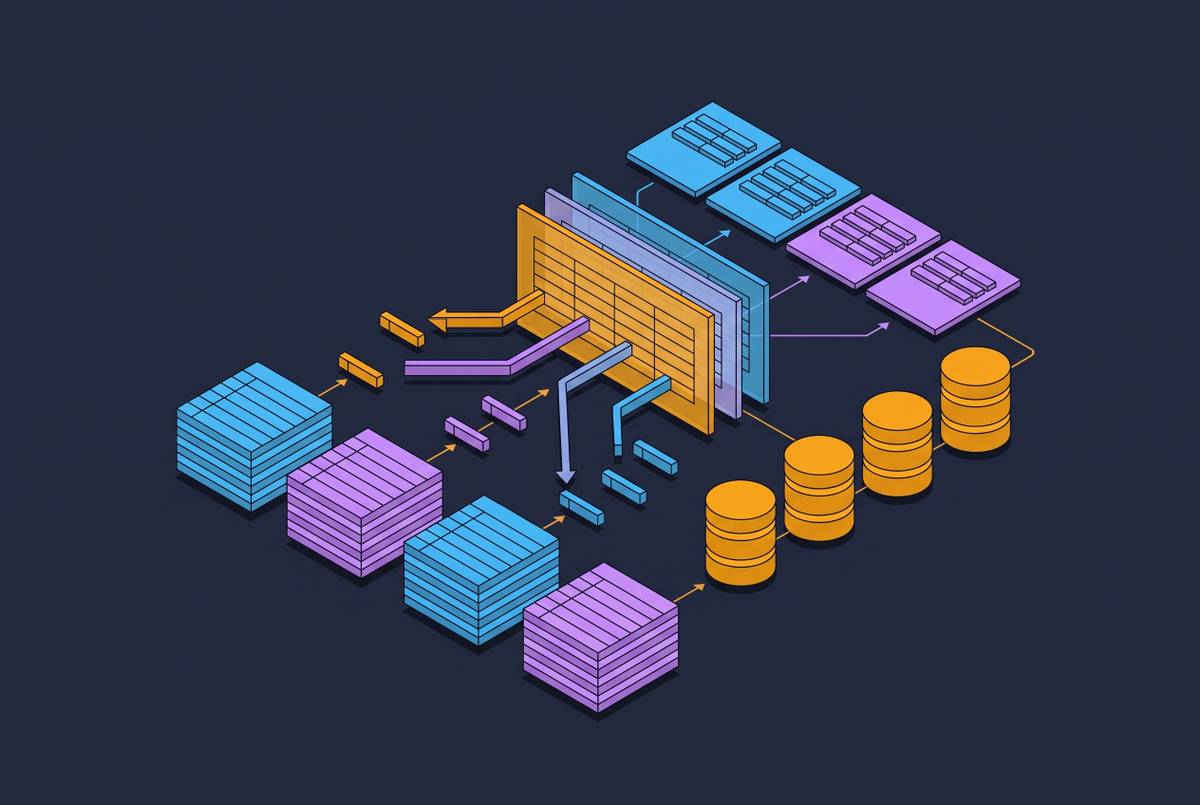
When reporting needs to leave the transactional workload behind, write pre-calculated results to Supabase Storage as Parquet files. A columnar engine such as DuckDB can query those files without reading the production Postgres instance. Saving dashboard query results to storage avoids a production query on every dashboard load and provides an audit trail of dataset snapshots. The export still originates in calculated source data, but subsequent analytical reads are decoupled from transactional writes. This is the offloading pattern Dreambase uses to keep analytical queries fast and cheap without directing them at production.
Define MRR, churn, and active customer once, then serve their governed results to dashboards, reports, AI agents, and investor exports. When a calculation changes, change it in the shared layer. Dreambase extends Supabase into this kind of governed shared data layer, with pre-modeled datasets available through a standard interface. Its role is to supply the common analytical output, so SUM(revenue) does not acquire a different meaning in every report.
Why AI agents touching production databases is the wrong default, and what to do instead
AI agents make this architecture more urgent because reporting is no longer only a human workload. Agents can pull metrics, generate reports, and answer questions, so connecting them to a database seems like an obvious shortcut. Broad database credentials, no rate limit, and no scope boundary give an automated consumer more authority than analytical questions require. That combination can lead to unexpected costs, unintended writes, or exposure of data outside its intended scope.
The safer default is read-only access to pre-governed datasets. Keep production credentials out of agent configuration and route agent queries through a gateway that enforces permissions and logs access. This puts the boundary in infrastructure rather than in instructions the model is expected to follow. Supabase's RLS documentation places access rules where the data lives rather than asking a model to remember which rows a user may see. RLS puts checks on database access at the source, where application-layer checks alone cannot do the job.
That source-level protection does not replace permissions on the dataset interface. Once an agent consumes exported results, the governed layer and its gateway must control that access. Least privilege therefore applies across the route from source to consumer. For teams handling personal data, it is also part of the compliance obligation under GDPR Article 32 and Article 25, supported by the data minimization principle.
How MCP connects the governed data layer to AI workflows without exposing the database
Model Context Protocol is an open standard developed by Anthropic for communication between AI systems and external tools or data sources. It replaces separate integration conventions with a structured connector interface. An MCP server can give an agent schema-aware access to an analytical dataset without making it navigate the underlying transactional database structure. This makes governed data easier to consume. It does not make raw data governed merely by connecting it.
Supabase's native MCP support illustrates the distinction. Its MCP server supports read and write operations, including querying schemas, inserting records, and invoking functions. Those capabilities are useful primitives, but they are broader than an analytics consumer needs. Pointing that connector at production with write permissions preserves the unsafe default described above.
An MCP server also does not repair data quality, normalize schemas, or turn raw responses into agreed metrics. Those jobs belong to the layer beneath the connector. In the analytics architecture, the governed dataset layer sits between production and MCP, exposing pre-modeled, read-only Parquet datasets. With Dreambase, that dataset layer is exposed through a single MCP server, with permissions enforced at the data layer. The connector completes the route to the agent, while the governed layer determines what the agent can reliably learn.
What a complete, engineer-free analytics stack looks like in practice
The finished stack can be judged by its outputs. It must give the team board-ready numbers from one governed source and keep analytical reads off production. It must also serve humans and agents through a shared interface without a separate warehouse or an ETL pipeline for the team to maintain. A dashboard on its own cannot do all of that. An agent that can write a query that looks right against raw tables cannot do all of it either.
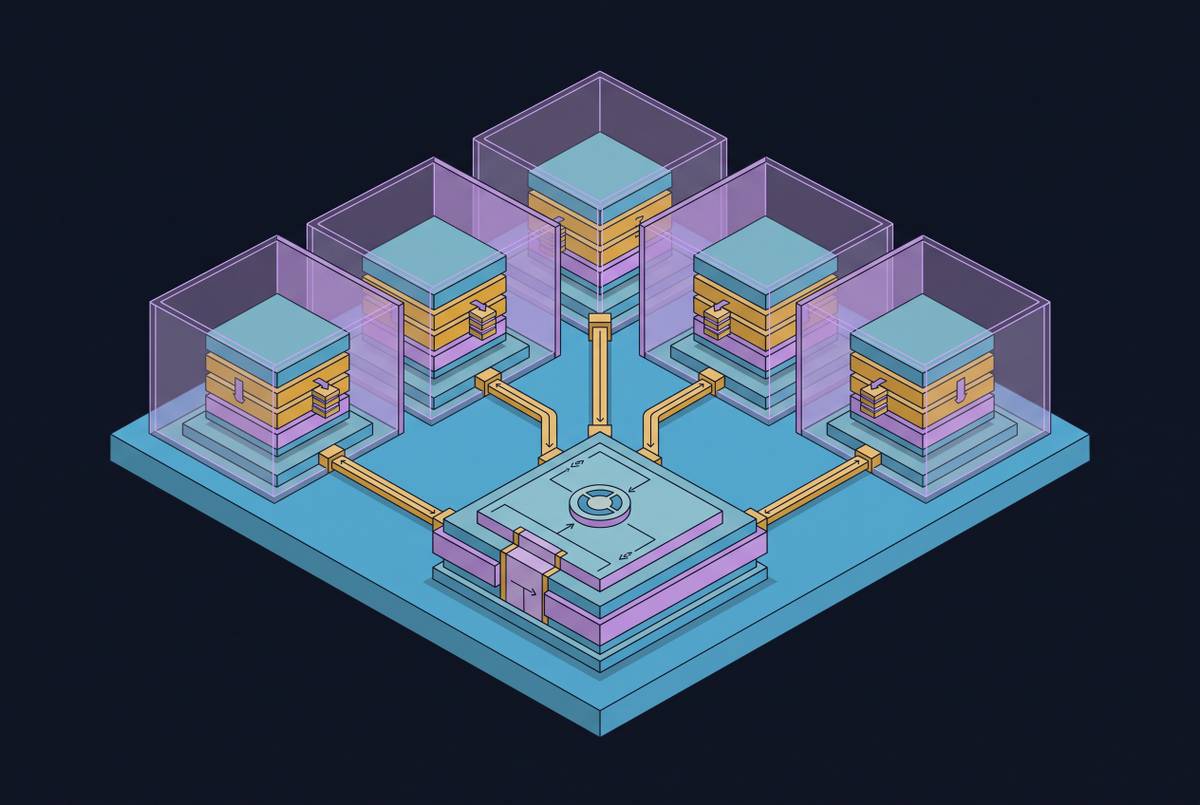
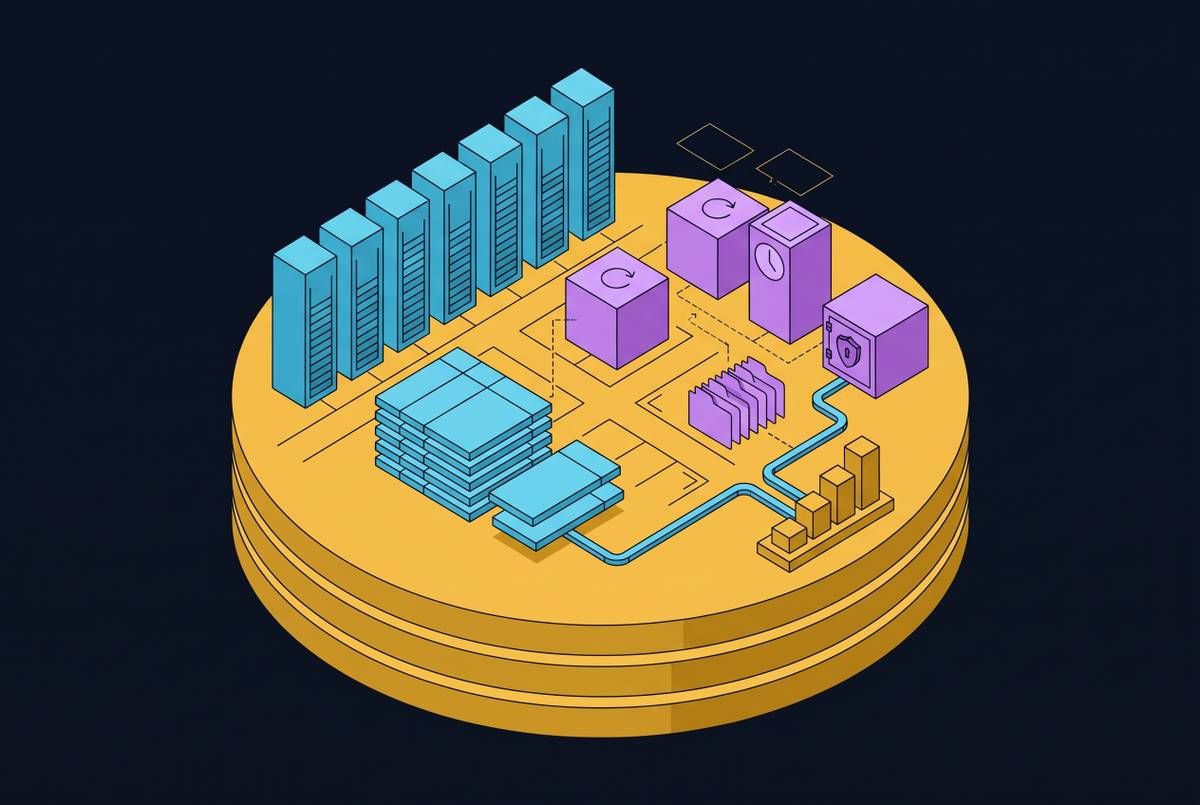
For a team assembling the Postgres-native path, materialized views and pg_cron provide scheduled calculations of the agreed metrics. Supabase Storage holds the resulting Parquet datasets, and a columnar engine serves analytical reads from those outputs. The metric definition layer keeps reports and dashboards using the same numbers, and an MCP interface gives agents structured, read-only access. RLS protects access at the Postgres source, and permissions on the governed dataset layer protect downstream consumption. Each component has a distinct responsibility rather than duplicating another system's calculations.
Some teams can start with materialized views and move analytical reads out of Postgres when the workload demands it. Others can use Dreambase from the start to pre-model metrics, manage governed Parquet datasets, expose MCP access, and deliver reports and dashboards without assembling those pieces by hand. The choice depends on whether the team can maintain the layer itself. The final test is straightforward. A founder, an investor, and an AI agent asking for this month's ARR should receive the same number from the same source, without a reconciliation step.