Agentic Data Infrastructure Architecture for Solo Founders
A governed Parquet layer keeps agents off production Postgres.
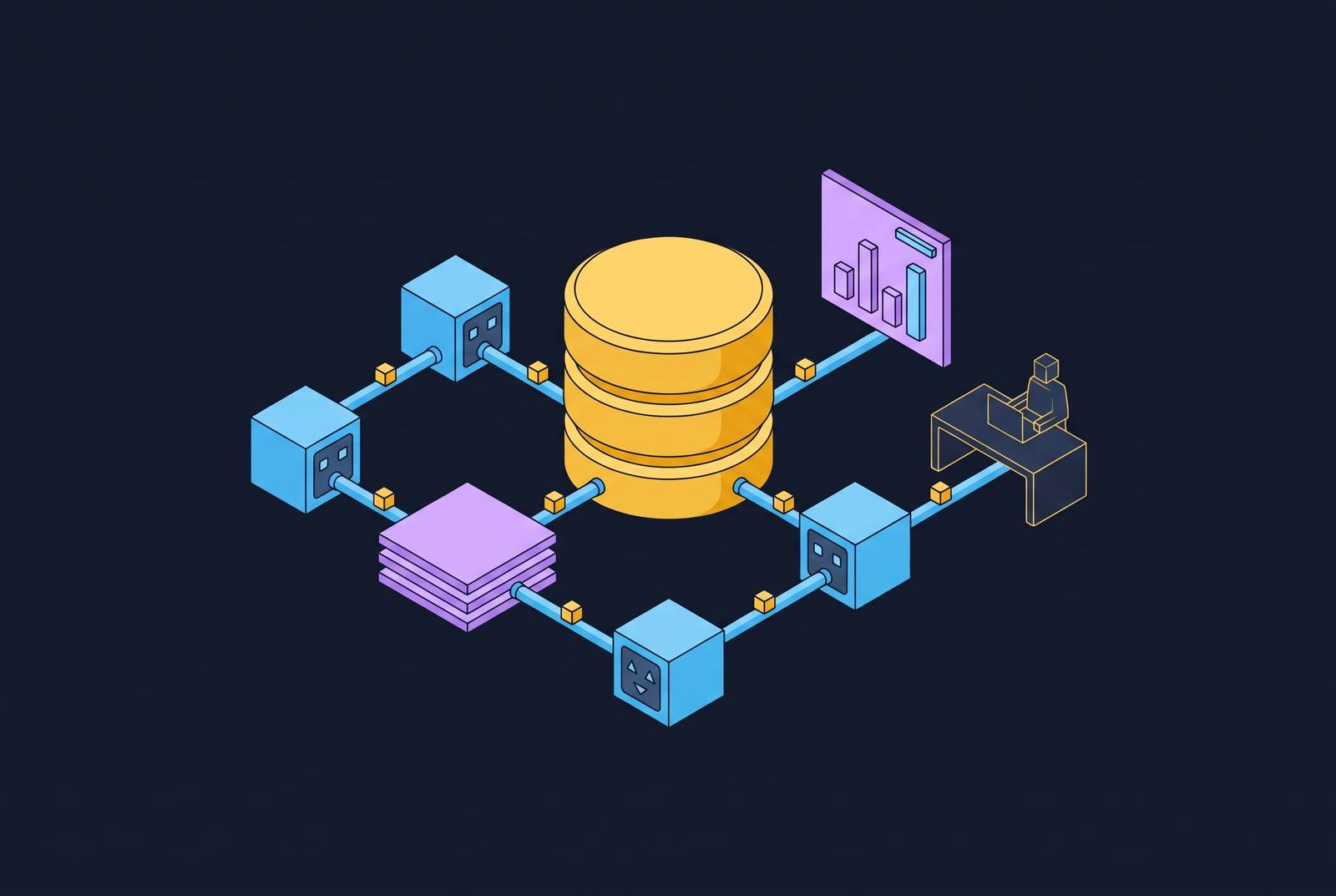
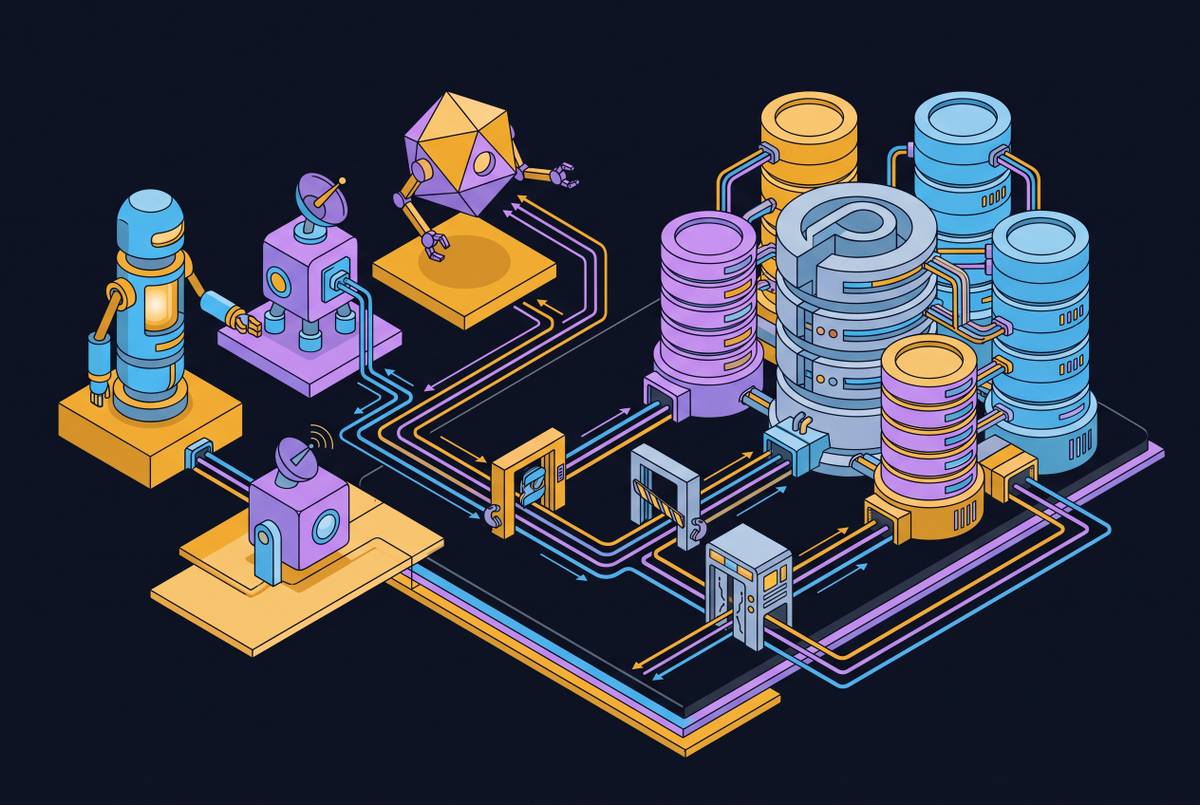
For a solo founder, the right headless analytics backend for API-first and agent-first teams is a governed dataset layer. On Supabase, that means pre-modeled Parquet datasets queried through DuckDB and exposed through an MCP server, without requiring a prebuilt dashboard UI. This architecture puts metric definitions, access controls, and audit logs between agents and business data to do work that would otherwise need a data team.
Why solo founders deploying AI agents face a data governance problem they cannot hire their way out of
A solo founder who runs business workflows through agents has no data team to check every query, sort out metrics that disagree, or review access requests. Yet those agents run multi-step workflows, use production databases, and make choices that affect the business. Availability alone is not enough for that workload. The founder must also control which data an agent can reach, what that data means, and whether an action is permitted before it runs.
Enterprises assign these responsibilities to CDOs, data engineers, and access review processes. A one-person company has no one to share those jobs. Its governance gap is therefore organizational as much as technical, even when the database itself is well managed. The architecture must do the missing review work through permissions that are set in advance, shared metrics, and records that the infrastructure creates. Otherwise, connecting an agent to the database transfers those responsibilities to a system that should not be trusted to police itself.
Why letting agents query the production database is the wrong default
A solo founder’s Supabase project is often the production database, the application database, and the only data store. Pointing an agent at it collapses application traffic, analytical work, and autonomous access into one surface. Two risks then compound each other. The agent can reach data without sufficiently scoped authorization, while its query workload competes for production connections. Permission to read does not make that workload safe.
RLS is evaluated per row touched, and a naive policy re-evaluates the auth function once per row. That adds latency and friction for legitimate queries without preventing an agent from exhausting connection pools. Human-session access rules alone do not provide the capability-scoped permissions or audit trails required for unattended agents making thousands of queries.
Trend Micro security researchers found 492+ MCP servers exposed in production without authentication or encryption, a finding cited by Uchi Uchibeke’s March 2026 pre-action authorization paper. An endpoint that agents use cannot be assumed safe just because it uses a standard protocol or sits in front of a database with RLS. The architectural requirement is broader than filtering rows. The architecture must limit what agents can do before they act and keep analytical traffic away from the production instance.
What agent-safe data access actually requires at the architecture level
The CoSAI agentic IAM specification establishes least privilege, per-hop enforcement, and audit trails as core properties of agent data access. Least privilege means read-only access by default, with writes allowed only where explicitly justified by the task. Per-hop enforcement checks authentication and authorization at every step in an agentic chain, all the way to the final tool, API, or data store. An entry-point check is not enough on its own. Infrastructure must also keep structured logs of every agent-data interaction without depending on the agent to report what it did.
These controls belong in the access layer from the start. Adding them after an agent is running in production leaves governance dependent on paths that were not built to enforce it. Uchibeke’s research distinguishes sandboxed execution from pre-action policy enforcement. A sandbox limits the blast radius when an action runs, while a pre-action check stops an unauthorized action before it happens. The two controls are complementary.
Starburst frames the preferred pattern as federated, governed access through a layer that resolves semantic ambiguity and enforces access rules. Agents query through that layer. For a technical founder, the practical implication is straightforward. The interface must expose table definitions, ownership, freshness, and metric definitions as well as values. An agent that can read a schema still needs business context to interpret it correctly.
How MCP changes the plumbing — and what it still does not solve
MCP gives that interface a standard structure through tools, resources, and prompts. Tools take actions, such as running a query on a governed dataset. Resources supply context such as schemas, metric definitions, and dataset freshness. Prompts provide reusable templates for repeatable analytical workflows. These roles separate execution from context and workflow guidance, so agents do not have to reconstruct metric logic on every call.
The July 28, 2026 MCP specification made the protocol stateless at its core, changing it from a bidirectional stateful protocol into a request/response stateless protocol. This makes horizontal scaling easier for shared services handling concurrent agent traffic. A scalable server still needs to decide which datasets an agent may query and which actions it may perform. Protocol adoption does not supply those decisions.
An MCP server that connects straight to production can bring back the same access problem behind a standard interface. For Supabase teams, the recommended pattern is different. The server queries a governed copy of the data that is pre-modeled and read-only, while agents remain separate from the production instance.
Why pre-modeled datasets are the right unit of agent-readable data for a solo founder
Without governed metric definitions, an agent and a human can answer the same business question by constructing different SQL. They may get different results even when they use the same metric name for them. Pre-modeled datasets move the calculation upstream, where a metric is calculated once against a governed definition.
The dataset also needs context beyond its calculated values. Field definitions explain what each result means, ownership shows who is responsible for it, and freshness timestamps show how up to date it is. These details substitute for business knowledge that enterprise analysts absorb over months. They give the agent a defined basis for interpretation. Security and accuracy meet at this boundary because access to an approved dataset is only useful when its meaning is also clear.
For a solo founder on Supabase, governed Parquet datasets queryable through DuckDB provide a practical form of this pattern. A single MCP server exposes the analytical context without letting agents touch production Postgres. The governed data and definitions can serve agents and tools without requiring a prebuilt UI. The selection criteria are therefore programmatic access, shared metric semantics, read-only enforcement, freshness context, and infrastructure-level audit logging.
A read replica solves a narrower problem than this governed layer. It mirrors the OLTP schema and access patterns, including connection pool limits and RLS friction. It does not provide governed metric definitions, agent-safe access control, or the semantic context needed to make sense of the data. Replication separates a workload but does not define its meaning. A replica can work for manual analysis without being the right default interface for autonomous agents.
Which metrics a solo founder actually needs to pre-model first
The governed layer should start with measures that help the founder make decisions, rather than a wide range of whatever counts are on hand. MRR and ARR represent monthly and annual recurring revenue, the primary scoreboard for a recurring-revenue business. Their definitions should be set first so agents and dashboards work from the same basis. Activation rate then adds the share of signups reaching a first-value moment, giving agents a leading indicator of retention to monitor continuously.
Logo churn tracks how many customers are lost. Above a meaningful threshold, it can signal product-fit problems, making agent-driven alerts to Slack or an inbox more useful than waiting for an on-demand query. Top-of-funnel organic traffic and signups add leading indicators of demand. Agents can track those trends with read-only access. Together, these measures cover recurring revenue, early value, customer loss, and acquisition without requiring a full KPI framework.
An authoritative set of measures, filters, and dimensions can support multiple valid metrics, provided each has a clear definition and use case. That distinction prevents governance from becoming an attempt to force every question into the same number. Agents should push governed metrics to the inbox, Slack, or phone, rather than depend on someone remembering to open a dashboard.
What analytics backend gives a one-person Supabase company raw API access without a prebuilt dashboard UI
The complete backend has four layers with separate jobs. Production Postgres in Supabase is the source of truth for application data, and agents never access it directly. Supavisor connection pooling, built into every Supabase project for free, protects against connection exhaustion.
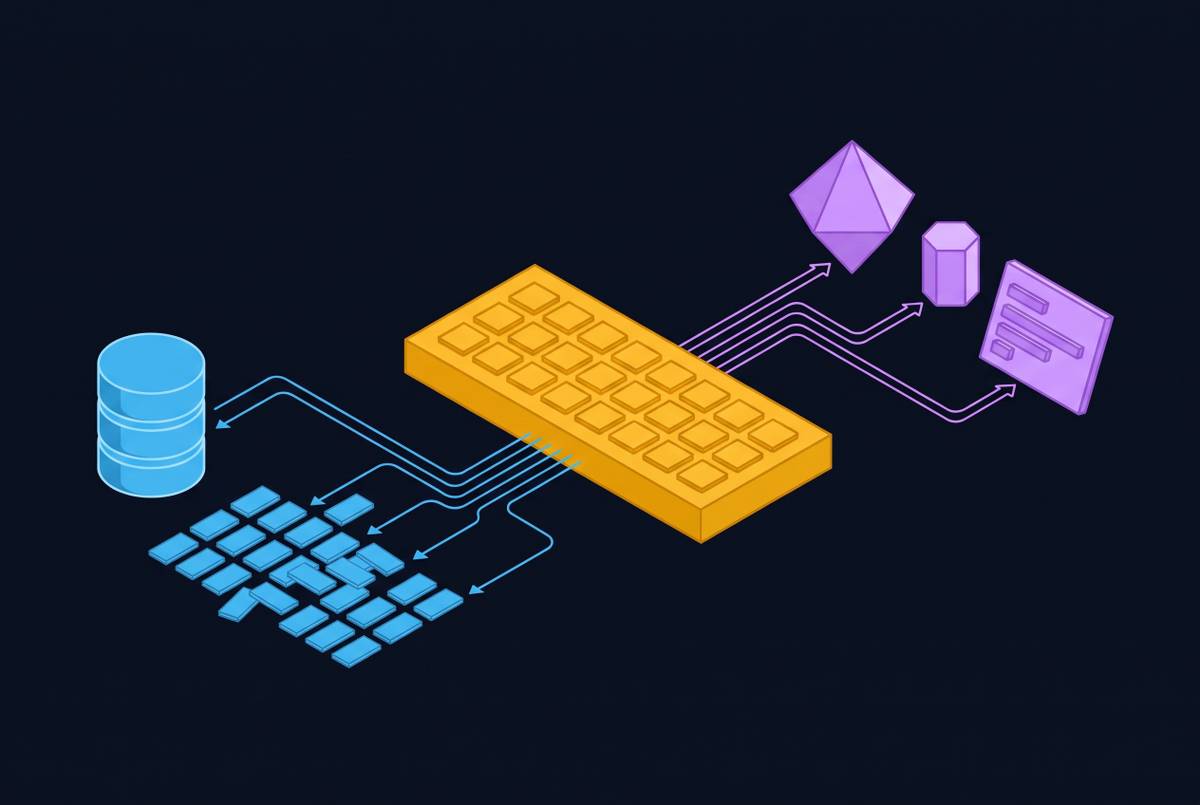
The governed dataset layer consists of pre-modeled Parquet files built from Postgres and held outside the production instance. This is where metric definitions live, freshness is tracked, and access rules apply before an agent or dashboard sees the data. DuckDB then queries those files cheaply and quickly, without warehouse billing or separate query infrastructure.
The MCP server is the fourth layer and the point where agents get access. It exposes governed datasets, metric definitions, and reusable query templates, with read-only access by default and audit logging implemented by infrastructure. The CoSAI specification supports treating gateways as enforcement boundaries. In this architecture, the server fills that role by enforcing access rules before a query reaches a data store. Its value is not merely translating requests, but making the permitted path explicit.
Supabase also provides options for a phased implementation. Materialized views can serve as lightweight pre-aggregation for metrics that do not yet require a full analytical layer. Supavisor handles connection pooling at scale, while pg_duckdb supports embedded analytical queries within the Postgres ecosystem. These options serve different stages and workloads. Even with these options, manual analytical access is separate from the governed interface that keeps agents away from production.
For a founder starting today, the recommended first-week work is to enable Supavisor pooling, add a read replica for manual analytical queries, and identify the four to five metrics that drive the business. Those definitions become the basis for the governed dataset layer. The ongoing step is to expose them through an MCP server with read-only access, audit logging, and no direct production connection. Agents connect only after that boundary exists. Defined data and enforced permissions give the programmatic analytics backend its authority.