Postgres Aggregate Tables as the Analytics Backbone for Agents That Have No UI
Pre-computed Postgres metrics give agents safe analytics access.
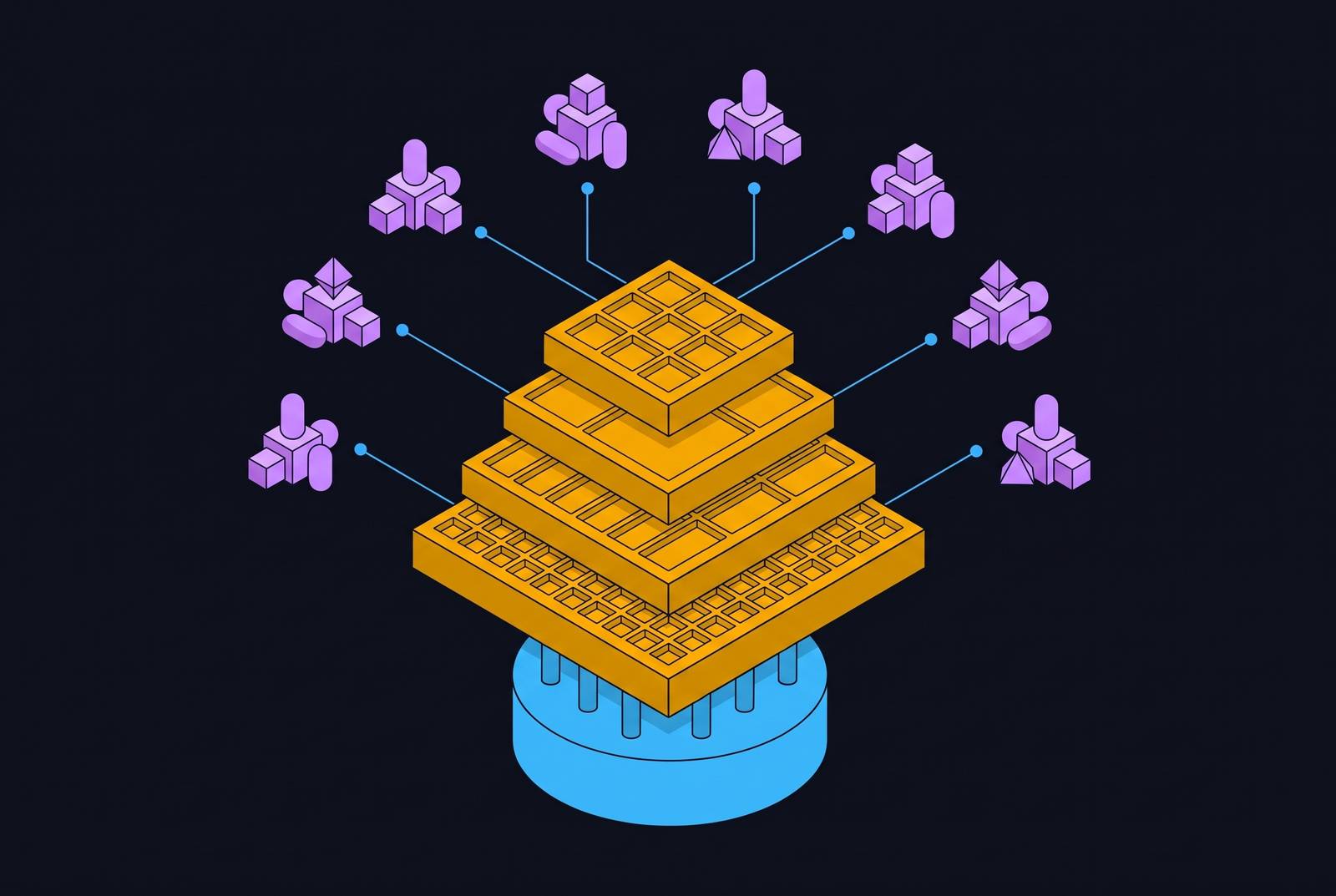
For API-first and agent-first teams building on Supabase, Postgres aggregate tables behind a governed MCP layer provide an analytics backend without an opinionated frontend. They give headless agents pre-calculated business metrics through a controlled API that excludes direct access to live transactional data. The architecture needs a dedicated analytical contract that spells out metric definitions, access rules, and freshness guarantees.
Why headless agents need a dedicated data interface
An agent triggered by cron, a webhook, or an orchestration script must retrieve business metrics programmatically or not at all. Unlike a person using an analytical application, it cannot fall back on a dashboard when its data interface is incomplete. The headless MCP pattern makes this dependency explicit. A stateless server exposes tools as a background API, while an autonomous client orchestrates the LLM and server through scripts. The interface must supply the context that a chart or a human operator would otherwise provide.
No human is watching the request take shape. If the data path returns the wrong metric, omits its time period, or exposes information beyond the task’s scope, the agent reasons from that input without a visual checkpoint. This is a data infrastructure problem. Production Postgres seems like the shortest route because it already holds the application’s records. But having the underlying records does not make it an appropriate interface for autonomous analytical requests.
What happens when agents query production Postgres directly
Postgres is a row-oriented OLTP database, and aggregating large ranges of data puts a different workload on it from routine application reads and writes. Analytical queries against transactional tables create I/O pressure that can interfere with CRUD operations, particularly as query complexity grows. The application competes with the agent for resources. PostgREST disables aggregate functions by default because of this performance risk, so enabling them without safeguards opens a path for expensive queries to crowd out legitimate traffic.
Connection capacity creates another shared constraint. Agents can exhaust connection pools, and adding agent instances or MCP server replicas does not remove the database bottleneck. A larger access tier may simply send more requests toward the same constrained resource. Unrestricted analytical access is therefore a poor base for a growing agent fleet, even if the first few queries seem harmless.
The State of AI Agent Security 2026 found that only a minority of organizations had agent-specific data access controls or had defined what each agent was permitted to access. Uchibeke’s pre-action authorization paper found that social-engineering attacks often succeeded under a permissive policy in an adversarial testbed, but a restrictive policy brought attacker success down to zero. Those results apply only to the tested policies. They still show why asking an agent to behave responsibly cannot make up for a missing authorization boundary.
Deployment growth makes that boundary more urgent. The same security report found that agent fleets roughly doubled between December 2025 and April 2026 while monitoring coverage barely changed, so more agents went unmonitored. It also found that a majority of organizations shipped agents without full security controls in place. Greater vigilance alone cannot compensate for an interface that grants excessive access and shares production resources. The alternative must separate analytical serving from transactional work and enforce scope before a request executes.
What aggregate tables are and why they are the right serving layer
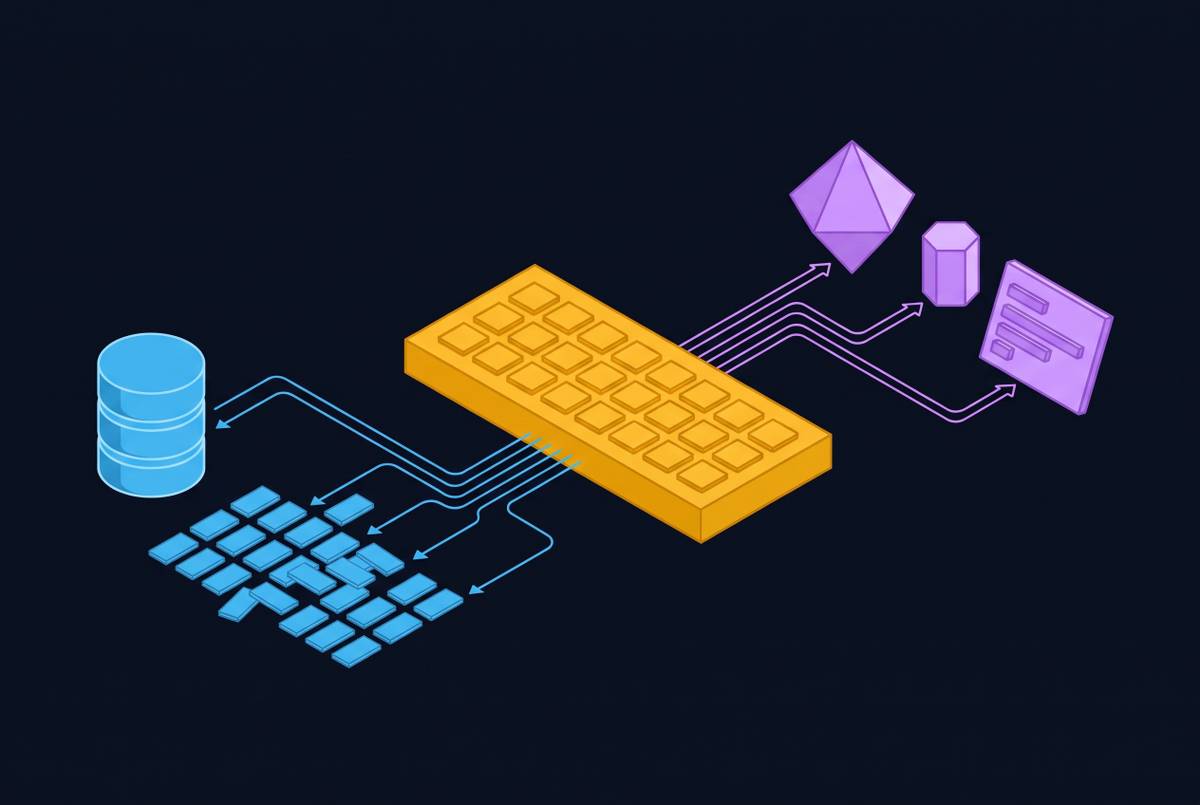
An aggregate table stores a metric result that has already been calculated. It is a persisted query result in a separate roll-up table, maintained through triggers or scheduled jobs. The agent reads the resulting row. This gives consumers a stable schema without an open-ended path through transactional records.
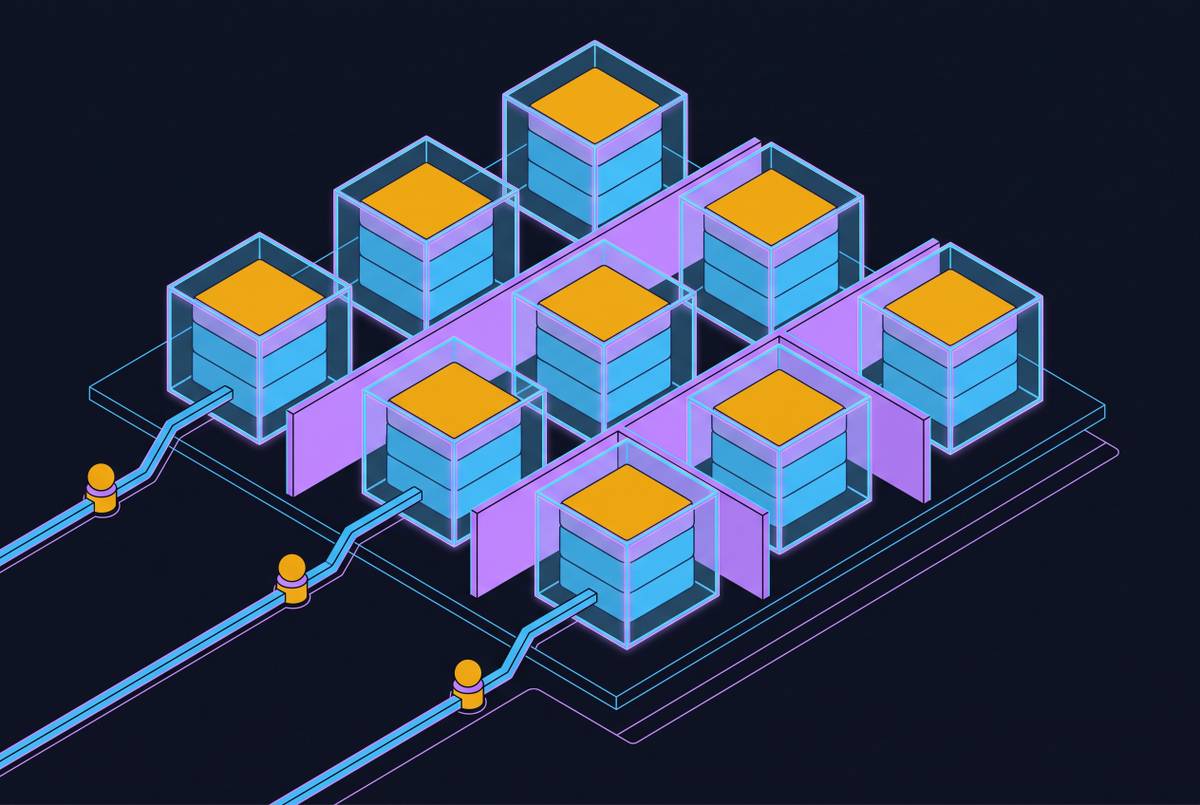
For agents, that schema is also an access boundary. The table exposes the approved analytical fields, while read-only permissions prevent the consumer from changing them. Its usefulness therefore extends beyond faster queries. A deliberate serving schema defines both what a metric means and what an agent may see, without requiring the agent to navigate raw business records. Governance comes from combining that limited schema with enforced permissions.
Unlike an ordinary view that re-executes its underlying query on each call, a persisted aggregate separates metric computation from metric retrieval. Refreshes still use resources, but agent requests no longer need to repeat the aggregation. Placement remains a distinct architectural decision. A separate table narrows the read path, while a separately served analytical copy keeps agent query traffic away from the live database and its connection pool.
The same design resolves conflicting metric definitions. Without a named, versioned aggregate, one consumer may calculate SUM(revenue) while another uses SUM(amount_captured), producing divergent answers under the same business label. A canonical aggregate table gives every consumer the same calculation, whether that consumer is an engineer or an autonomous agent. Its name becomes the metric’s identity. Changes to that definition can then be governed as changes to a shared contract.
How do Supabase teams build analytics with raw API access?
Supabase’s default configuration is tuned for OLTP, so teams building an analytical layer for agents must choose how to handle materialization, refresh, and access scope. For most B2B SaaS products, the actionable core is five or fewer metrics, namely CAC, LTV, monthly churn, ARR, and gross margin. Each should map to a named table. More metrics add little value until those core calculations are stable.
Materialized views provide the first Supabase-native implementation. Postgres can pre-compute the aggregates, and a cron job can refresh them periodically. That creates an explicit freshness tradeoff. Faster refreshes reduce staleness but consume more compute, while slower refreshes reduce compute demand at the cost of older results. The appropriate interval depends on how time-sensitive the consuming agent’s decisions are, rather than on a blanket preference for the freshest possible data.
For metrics that cannot be fully pre-materialized, analytical queries should target a read replica rather than the primary instance. This keeps that query traffic off production Postgres instead of asking the main application database to serve both workloads. Pre-calculation and placement solve different parts of the problem. Supabase acquired Hydra, the team that co-developed pg_duckdb, in 2026 to build Supabase Warehouse, providing a next tier for embedded analytics within the ecosystem.
The schema should be legible without inherited transactional abbreviations. For a monthly churn aggregate, for example, the metric column should use an unambiguous business name, with period_end identifying the reporting period and calculated_at recording when the result was computed. Those fields answer different questions. An agent needs to distinguish the period a number describes from the age of the calculation it received. With that context in the result, the agent can check freshness without a separate metadata query.
Access grants complete the serving contract. The agent-facing service account should have read-only access scoped to the analytical schema, never to the transactional tables from which its metrics were derived. That restriction makes the approved schema the limit of available data rather than a suggested starting point. It also separates the consumer’s role from the work that builds and refreshes aggregates. Raw API access can then mean direct access to governed metrics without implying unrestricted SQL access to the application database.
Delivering aggregate tables to agents through a governed MCP layer
An MCP server supplies the interface between the agent and the governed analytical copy. The agent calls the server, and the server queries the aggregate tables. Database credentials stay out of the agent. This arrangement preserves programmatic control without forcing a dashboard into the workflow or making the autonomous client responsible for managing a database connection string.
MCP’s three primitives divide the interface into distinct roles. Tools execute queries against the aggregate tables, while Resources expose schema context and dataset definitions. Prompts supply reusable templates for repeatable analytical workflows, such as “report weekly churn delta”. The metric row alone is not the whole interface. The surrounding definitions explain what the row represents, and the workflow template gives the agent a consistent task to perform with it.
The July 28, 2026 MCP specification revision made the protocol stateless at the protocol layer through six Specification Enhancement Proposals that do away with protocol-level sessions. Requests can therefore reach any server instance behind a plain round-robin load balancer, so the access layer is easy to scale horizontally. That does not enlarge the database’s capacity. MCP servers can scale on their own, but sending every request to production leaves the original connection-pool bottleneck in place.
Authorization belongs before execution. Uchibeke’s Open Agent Passport specification defines pre-action authorization as intercepting tool calls and evaluating them against a declarative policy before they run. That mechanism complements model alignment and post-hoc evaluation. A scoped read-only token expresses one part of the policy, while the same enforcement point can apply data-quality gates and operational contracts. Security must follow the data path.
A headless cron workflow then has a bounded sequence. The scheduled agent calls an MCP Tool, the server reads an aggregate table, and the returned pre-calculated row becomes the basis for reasoning and an action or report. The request requires no ad-hoc aggregation at runtime. Because its destination is the analytical serving layer, it does not consume the live database’s connection pool. The protocol handles delivery, while the data contract determines what can be delivered.
Keeping aggregate tables trustworthy as agents and data both evolve
If an aggregate drifts silently, an agent may continue to trust its familiar name and schema even though the underlying number no longer represents the intended calculation. That makes maintenance part of the architecture. A governed table must be accurate when it is first created and stay accurate through refresh cycles, transactional schema changes, and use by new consumers.
Freshness is the first continuing obligation. Each aggregate’s refresh cadence should match the decision frequency of the agents that consume it, and the MCP response should surface its calculated_at timestamp. An agent that can see the age of its input can qualify its reasoning, while an agent without that information cannot distinguish a recent calculation from an outdated snapshot.
Lineage makes incorrect answers traceable to their inputs. It records where data came from and how it changed before reaching the agent, allowing investigation of stale or incomplete results. Version control adds a record of the definitions involved. Because autonomous decisions occur rapidly, batch governance and periodic audits are insufficient on their own. The audit trail must be continuous and attached to the data path.
Transactional changes also require explicit analytical changes. If a column is renamed or a billing field moves, an aggregate can give the wrong answer even when the process still returns numbers. A production schema change should require an explicit update to the analytical layer and a version bump that MCP can surface to consumers.
Governance must scale with both the fleet and data volume. Patterns installed for three agents must remain workable for thirty or three hundred, which favors a centrally maintained analytical schema over independently written queries scattered across clients. Named, versioned aggregates make that shared responsibility concrete. They are long-term governance infrastructure. Headless agents have no dashboard to fall back on, so the data layer itself must be trustworthy by construction.